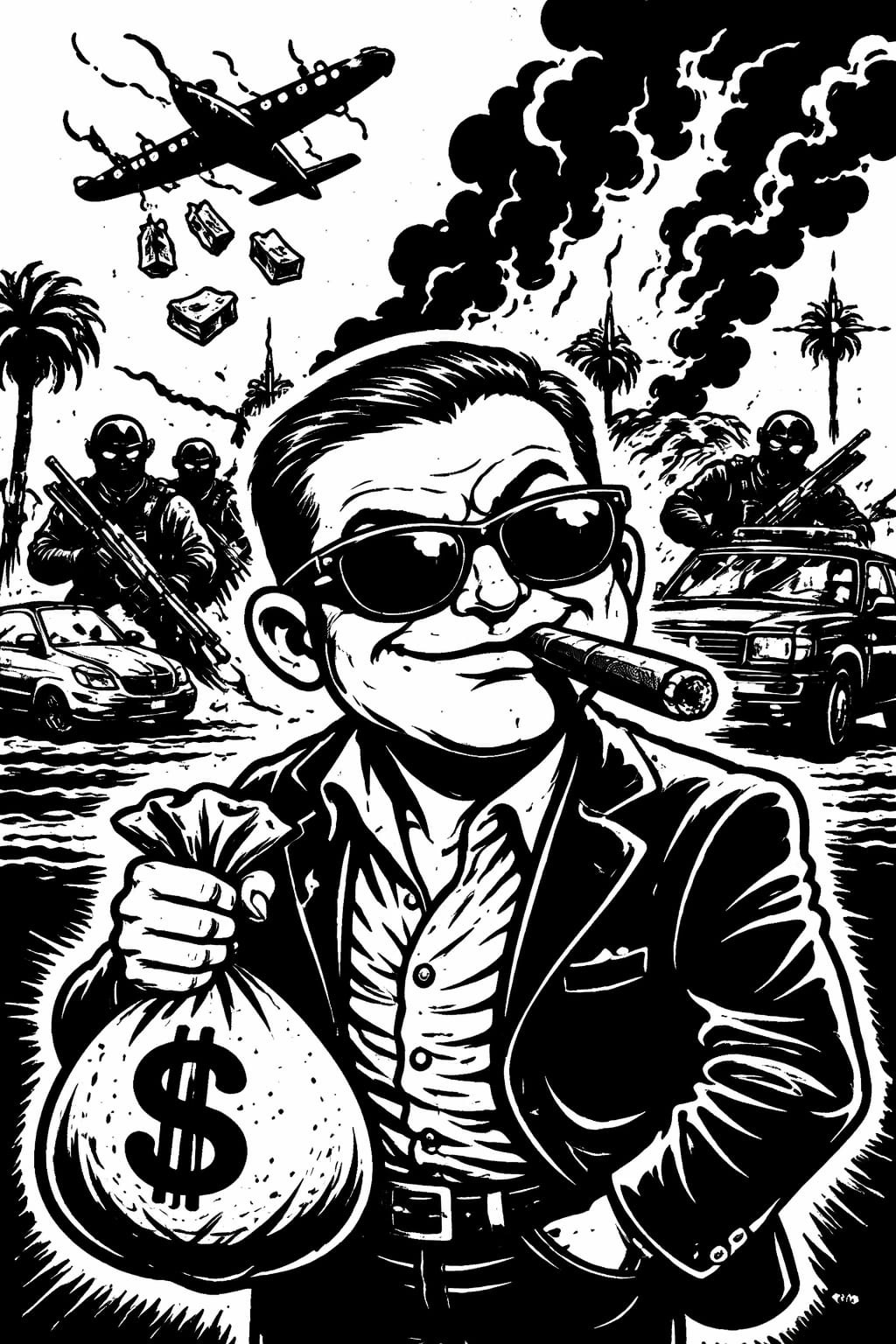
SINALOA: SIMULTANEOUS COEXISTENCE OF OPPOSING FORCES (PROJECTION FOR TODAY)
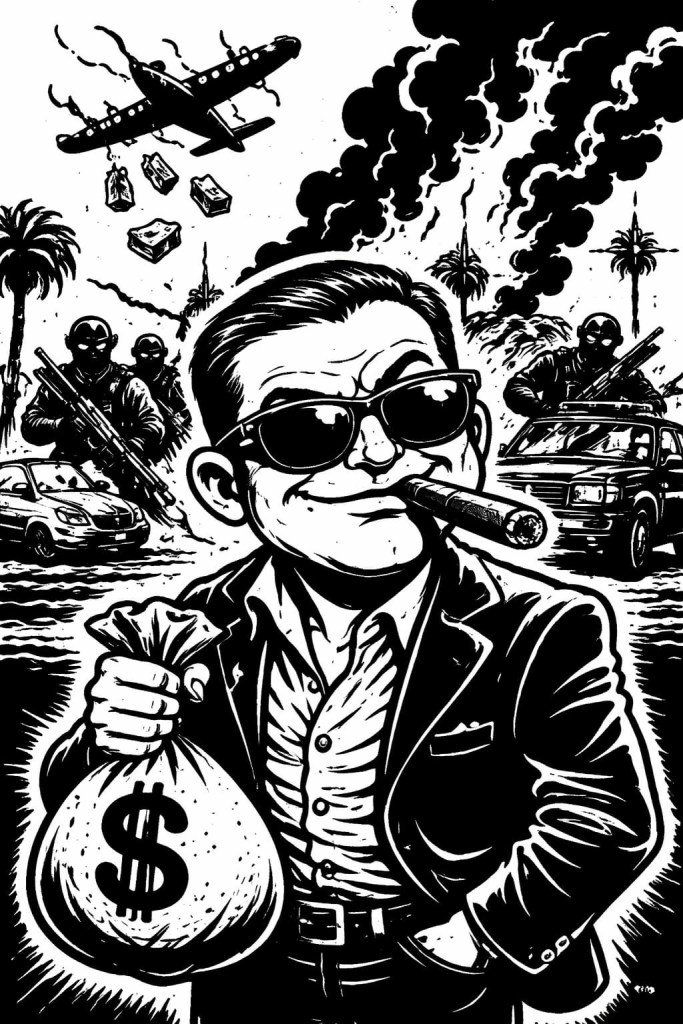
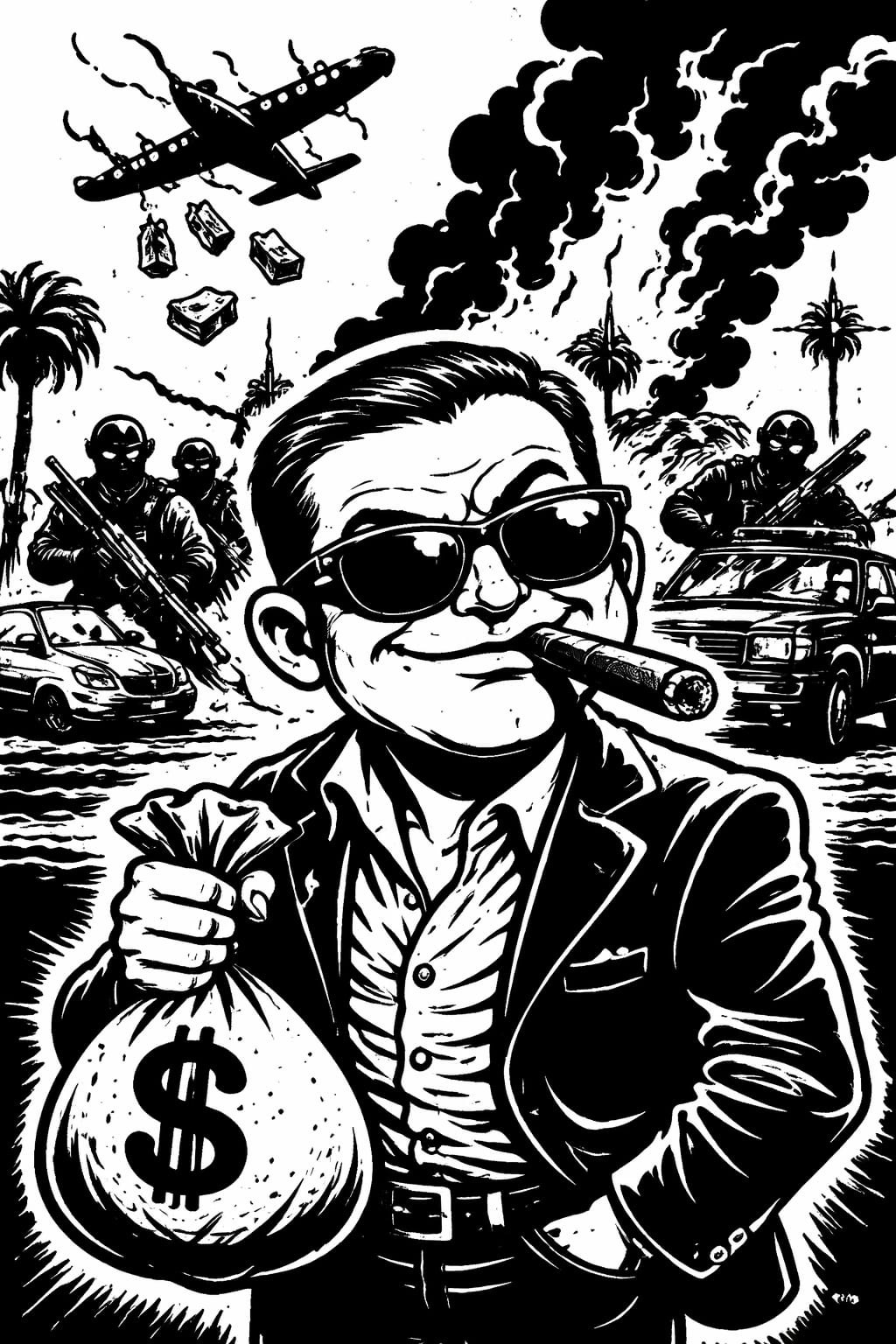
CABRONCITO CYNICAL
SINALOA: SIMULTANEOUS COEXISTENCE OF OPPOSING FORCES (PROJECTION FOR TODAY)
Definition: Cabroncito cynical refers to a sly and shameless person who knows exactly what they are doing, plays with advantage, and acts as if nothing is happening. In Ancient Greece, politicians and thinkers associated with Cynicism were recognized for living without masks, rejecting social hypocrisy, telling the truth even when it was uncomfortable, and despising power, money, and appearances; figures like Diogenes exemplified this stance by publicly questioning norms and exposing the contradictions of power. It seems that in Sinaloa we have advanced a lot… but in the opposite direction, in reverse.
Ernesto Alonso López
🔎 WHAT IS BEING SAID ON SOCIAL MEDIA ABOUT SINALOA
Public security: silent adjustments and indirect signals Citizens think that:
Isolated acts of violence appear (not necessarily massive, but symbolic).
Discreet operations take place in specific neighborhoods of Culiacán or rural areas.
Versions circulate on social media before official information.
👉 Reading: This is not an open escalation; it is a fine-tuned reconfiguration. When media noise decreases, tactical movement increases.
Culiacán: tense normality
The city operates “normally,” but with social hypervigilance (people are alert, measuring schedules and routes).
Possible increase in checkpoints or military/state presence at key points.
👉 Reading: The population no longer reacts with shock, but with adaptation. This is key: normalization of risk.
Mazatlán: economy vs perception
Tourism activity continues, but with conflicting narratives: promotion vs concern.
Businesses remain alert to any event that may affect the image.
👉 Reading: Mazatlán lives in a delicate balance; if something happens, the impact is more media-driven than territorial.
North (Los Mochis / Guasave): low intensity, high observation
Fewer visible events, but movements of local actors.
Agricultural or water-related issues return to the conversation.
👉 Reading: This is a structurally tense zone rather than an explosive one; additionally, the killing of a person, allegedly due to family-related issues, during a confrontation with police, has become a topic of discussion on social media since early morning.
Central region (Guamúchil and surrounding areas): fragile stability
Apparent calm.
Dependence on what happens in Culiacán.
👉 Reading: This is a “thermometer” zone; if something rises in Culiacán, it is quickly felt here.
🌎 NATIONAL AND INTERNATIONAL CONTEXT IMPACTING SINALOA TODAY
Mexico – United States – Canada (USMCA)
Continuous pressure on issues of security, migration, and agricultural trade.
👉 Impact on Sinaloa: agricultural exports under scrutiny, tougher political discourse, and adjustments in prices and logistics.
United States (permanent electoral cycle)
Harsher narrative on security, fentanyl, and the border.
👉 Reading: Sinaloa once again becomes an indirect reference in U.S. discourse, even without being explicitly mentioned.
Global conflicts (Ukraine, Middle East, Asia)
Pressure on energy, food, and supply chains.
👉 Impact: price fluctuations and local economic uncertainty.
🧠 PSYCHOSOCIAL KEY OF THE DAY
It is not so much what happens, but how what happens is perceived. People are more alert, more adapted, and less surprised. This generates something dangerous: violence stops being felt as extraordinary and becomes part of the mental landscape.
🧭 PROJECTIVE CONCLUSION
A day is perceived with movement without spectacle, tension without rupture, and activity without a clear narrative, but with a very evident background: Sinaloa is not calm, it is in an unstable equilibrium.
WHAT DOES THIS MEAN?
From a complex systemic perspective, the concept of unstable equilibrium refers to dynamic states far from classical thermodynamic equilibrium, in which multiple subsystems — social, economic, political, and security — operate under conditions of nonlinearity, positive feedback, and extreme sensitivity to minimal perturbations, as proposed by chaos theory, Prigogine’s systems dynamics, and models of self-organized criticality. In this type of configuration, the system appears macroscopically stable, but in reality it is sustained by accumulated internal tensions that do not dissipate, but are continuously redistributed, generating emergent patterns that can abruptly shift toward states of higher social entropy in response to any seemingly insignificant stimulus. In psychosocial terms, this translates into an adaptive normalization of risk, where collective perception reorganizes its thresholds of alert to maintain operational functionality, while at the structural level, power relations, economic flows, and territorial control dynamics are reconfigured in real time without the need for visible ruptures. Thus, equilibrium does not imply the absence of conflict, but the simultaneous coexistence of opposing forces at a critical point of transient stability, where the system holds not because it is resolved, but because it has not yet collapsed.
In Sinaloan terms:
Things look calm on the surface, but only on the surface. Everything keeps moving, people go about their business, but underneath there is a lot of tension shifting around. You don’t see the big chaos, but any small thing can light the fuse. It’s not that nothing is happening; it’s that everything is arranged in such a way that it hasn’t exploded yet… but it can explode at any moment.
And Rocha? Is he still managing the “stability”… or just managing time before something blows up?
And did Rocha already buy his permanent license? How much did it cost? What a headline!
And Claudia? And Andrés Manuel? And Trump?
 Agenda Interior
Deja un comentario