REALIGNMENT BY BULLETS, BOMBS, AND DRONES
Missiles dilute order
Did it ever really exist?
Ernesto Alonso López
TEXT X
Something broke a while ago, and many still pretend to be surprised. The country that prides itself on strong institutions wakes up every day to mutilated bodies in the streets; the world that once spoke of peaceful globalization now debates wars, weapons, digital espionage, and technological control; and meanwhile, elites repeat their speeches as if nothing had changed. But it did change. And a lot. What now appears in scattered headlines—violence, crises, wars, espionage, disputes over technology or resources—is part of the same phenomenon: a redistribution of power that is not negotiated at elegant tables, but in territories where those with the most force, money, or ability to manipulate systems prevail.
In capitalism, this is called a reconfiguration of power in a competitive system: when economic or technological conditions change, the strongest actors reposition themselves to maintain their advantage.
In Marxism, it is known as a realignment of power relations between classes and structures: when the system enters crisis, dominant forces attempt to preserve their control.
The first clue appears in territorial violence. When real power realigns, territory becomes a testing ground. Political discourse speaks of security, but reality shows open disputes over economic and territorial control. It is no coincidence that the places where executions and clashes concentrate align with economic or strategic routes.
Examples abound.
Sinaloa with internal disputes redefining criminal leadership.
Zacatecas turned into a war zone over transport and drug routes.
Guerrero with conflicts where armed groups, mining, and local control intertwine.
The result? Violence does not seek only to intimidate. It seeks to mark territory. The logic is old: whoever controls the plaza controls the flow of money. And money, in a system where the legal and illegal intersect, means power.
In capitalism, this is called competition for control of markets and economic territories: different actors fight to dominate spaces where money circulates.
In Marxism, it is known as the struggle for control of the means of production or strategic resources: different groups compete to appropriate what generates wealth.
The second clue appears in the institutional collapse no one wants to admit. Institutions are still there—with buildings, seals, and press conferences—but their real capacity to impose order is dissolving. When that happens, power redistributes toward actors who do not necessarily appear in the Constitution.
Clear examples.
Municipalities where police forces disappear or are overwhelmed.
States where federal forces act like firefighters every time a crisis erupts.
Regions where real authority is not decided in councils but in private meetings among power groups.
This is not new in history. When the State loses the ability to control territory, others occupy the space. In practice, a hybrid system emerges where formal authority and informal power coexist.
In capitalism, this is called institutional weakening within a competitive power system: when the State loses effectiveness, private or parallel actors fill the vacuum.
In Marxism, it is understood as a crisis of the state apparatus that protects the dominant system: when the State can no longer maintain the order of the economic model.
The third clue appears in the global economy. For years, the idea was sold that the world was moving toward permanent cooperation. Today, reality shows something else: fierce competition for strategic resources and technology.
Recent examples make it clear.
The United States and China compete for leadership in artificial intelligence and semiconductors.
Europe seeks energy independence after relying on Russia.
Countries compete for critical minerals such as lithium, cobalt, and rare earths.
Why? Because whoever controls technology and resources controls the economic future. Power no longer depends only on armies. It depends on chips, data, and energy.
In capitalism, this is called strategic competition for resources and technology: powers fight to dominate sectors that generate wealth and power.
In Marxism, it is known as capital expansion and imperial competition for resources: economic blocs compete to control raw materials and markets.
The fourth clue appears in the silent war over information. In the past, power was exercised through visible weapons. Today, it is also exercised through invisible algorithms.
Examples abound.
Disinformation campaigns that influence elections.
Digital platforms that shape public opinion.
Surveillance systems that track social behavior in real time.
Control of data has become the new frontier of power. It is not just about knowing what people think. It is about anticipating how they will react.
In capitalism, this is called the data economy and control of strategic information: whoever possesses massive information gains economic and political advantage.
In Marxism, it is interpreted as ideological control through technological apparatuses: tools that influence how society thinks.
The fifth clue appears in something even more uncomfortable: the exhaustion of the political model that dominated recent decades. Democracies that promised prosperity now face growing inequality. Economic systems that promised stability produce recurring crises. The narrative of permanent progress no longer convinces many.
Obvious examples.
Mass protests in different regions of the world.
The rise of radical or anti-system leaderships.
Widespread distrust toward governments, parties, and media.
When trust breaks, the system loses legitimacy. And when it loses legitimacy, power seeks new ways to sustain itself.
In capitalism, this is called a crisis of legitimacy of the liberal democratic system: people stop trusting institutions.
In Marxism, it is known as a structural crisis of capitalism: the system faces contradictions that generate social conflict.
All of this is part of the same movement. Territorial violence, geopolitical disputes, technological warfare, information manipulation, and institutional crisis are not separate stories. They are pieces of the same board.
The realignment is happening now. And it happens in the oldest way humanity knows: pressure, conflict, and force.
That is why the title is not a metaphor.
It is a diagnosis: realignment by bullets, bombs, and drones.
Here comes a missile:
You can feel it right now—that uncomfortable moment when something finally clicks in your mind. It is not exactly fear. It is that mix of anger, clarity, and distrust that appears when you realize that many of the rules that sustained order have already broken… or are breaking right now.
You feel the pieces suddenly fit together: local violence, distant wars, overwhelmed governments, technology that watches everything, economies competing without limits. Suddenly, everything looks like part of the same board. And that feeling does not come from imagination. It comes from recognizing a pattern that was already there.
And deep down remains the question that unsettles more than any headline:
if order has just broken… why did it break?
The answer is not mystical—it is structural. In political science and complex systems theory, this is explained through phenomena such as the Law of Power Concentration in Competitive Systems, the Theory of Hegemonic Transition, the Principle of Institutional Entropy, and the Instability Model of Complex Adaptive Systems.
Put simply: when too many economic, technological, and political tensions accumulate within the same system, equilibrium can no longer hold. Institutions lose their capacity for control, powerful actors seek to secure their position, and the system enters a phase of readjustment.
In scientific terms, the system has ceased to be stable.
It realigns
Or it collapses…
And if it collapses, the next catastrophic world war—the one that would come after such devastation—will be fought with sticks and stones, as a famous scientist once warned. (If anyone is left to fight it).
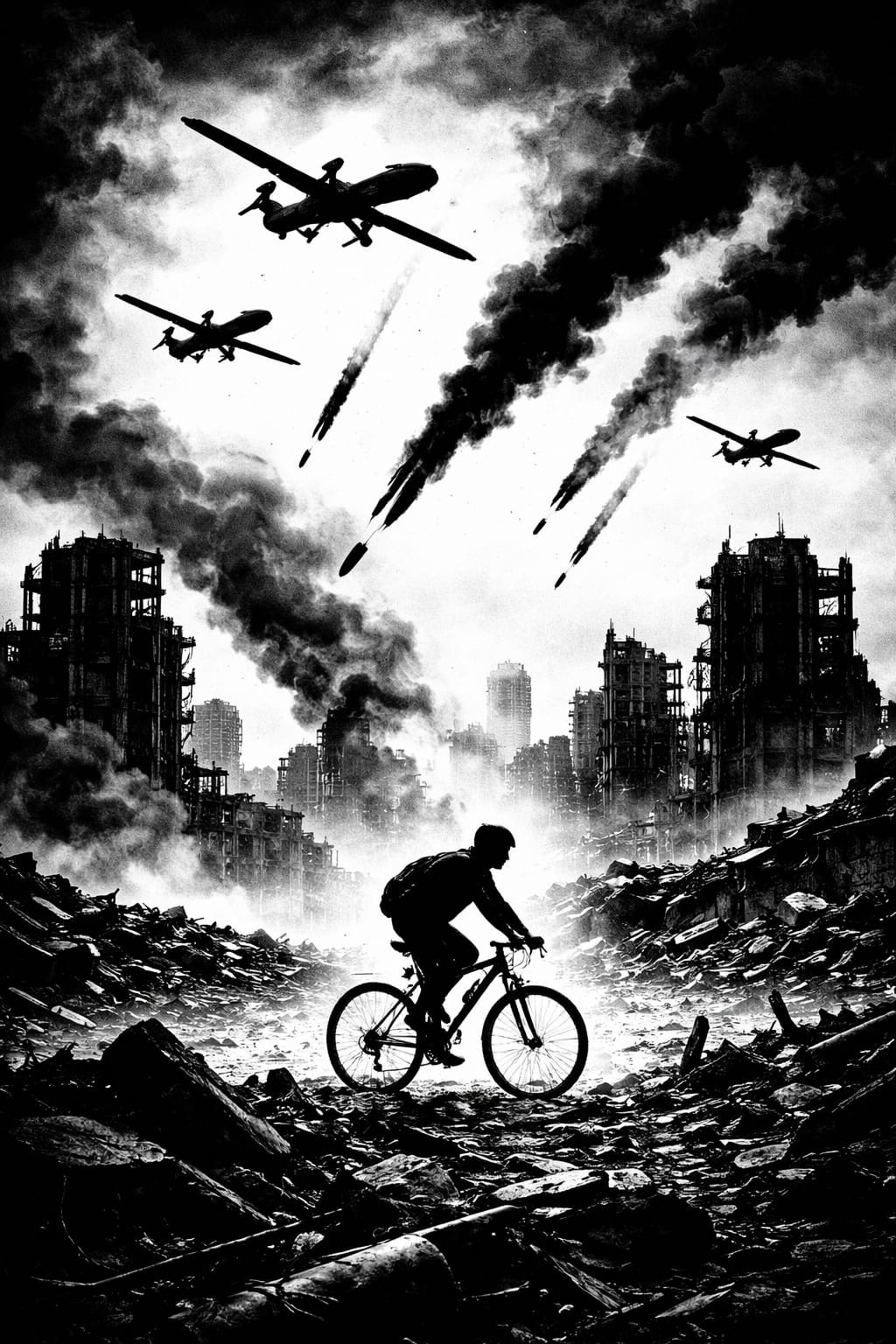
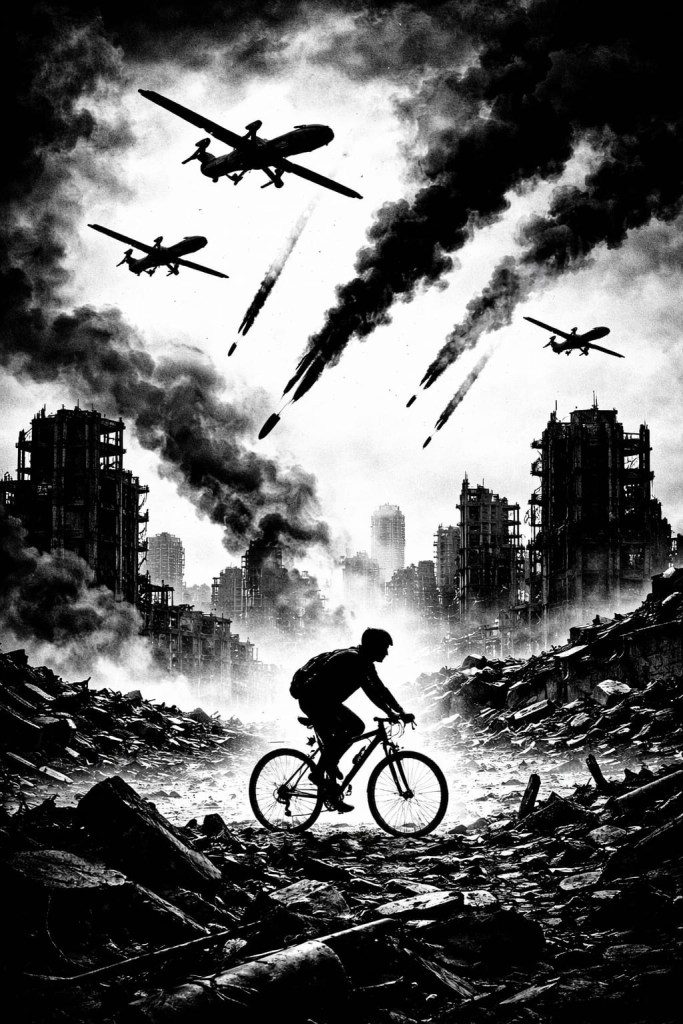
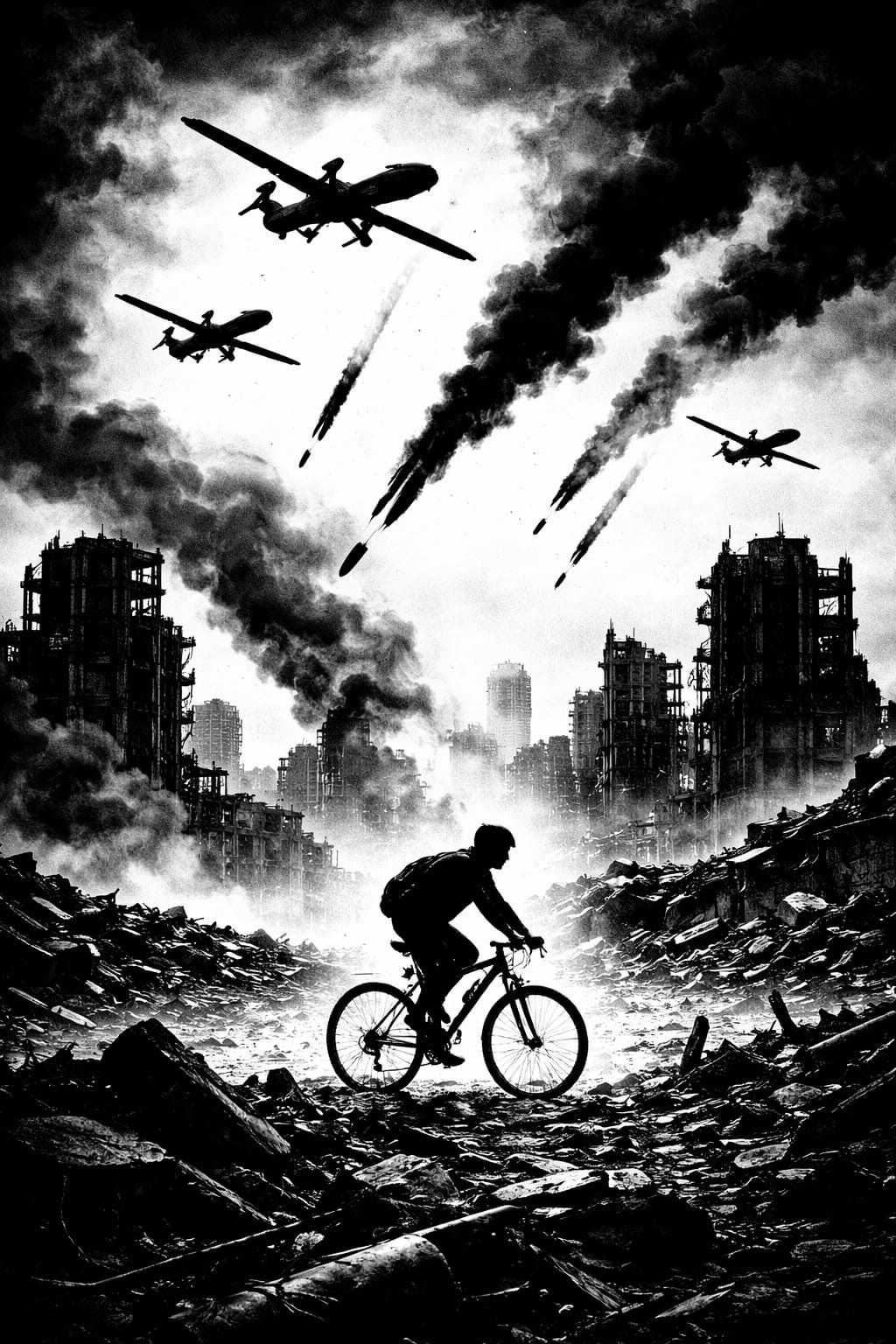
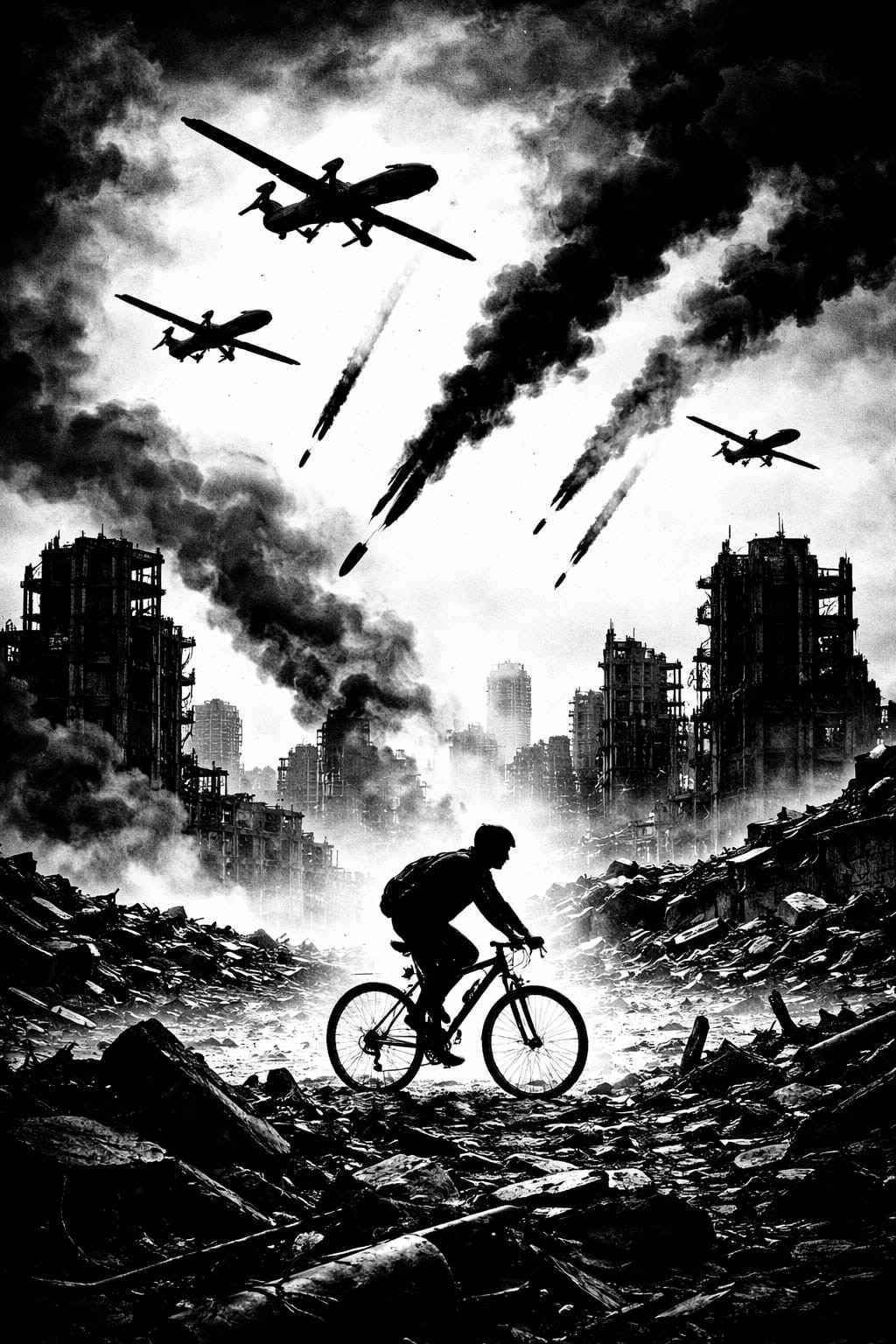
Meanwhile, there is no pause and no rest: everyone must keep pedaling like on a bicycle going uphill, because this system does not tolerate those who stop. The one who stops pedaling loses balance, falls… and the world keeps rolling over them.
The world discards.
And there lies the most brutal irony of all: humanity lacks precisely what it boasts about the most… humanity.
 Agenda Interior
Deja un comentario